
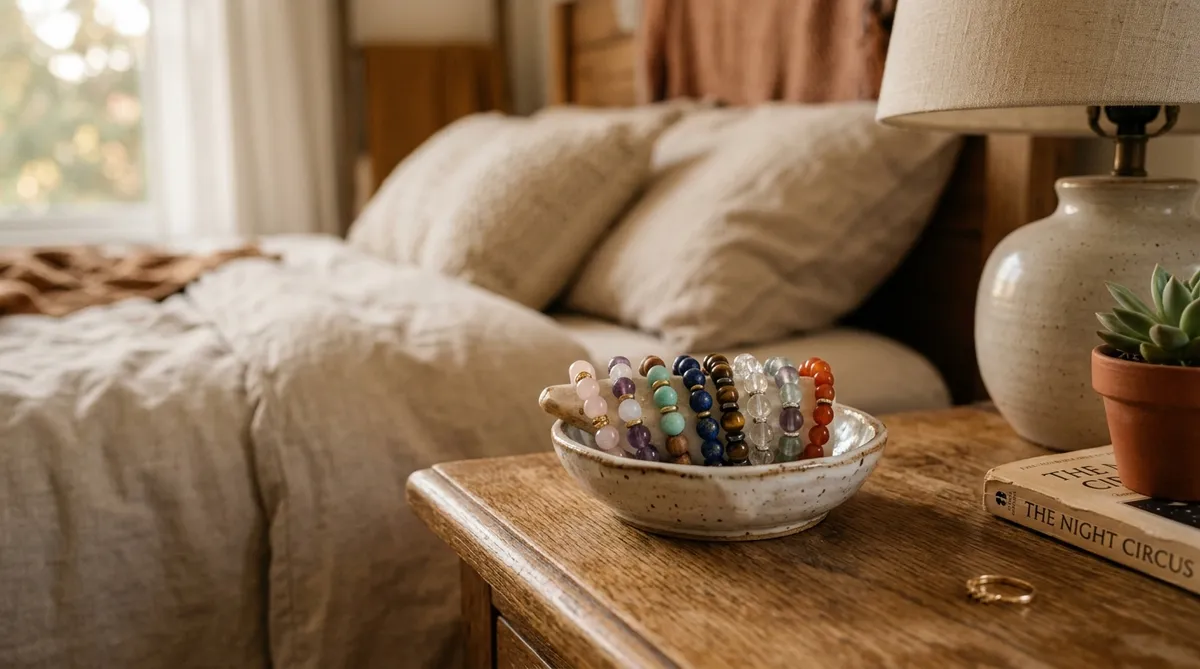
Wearing a natural crystal bracelet daily is a deeply personal practice that combines aesthetic elegance, mindful intentionality, and traditional holistic energy. However, even the most durable gemstones and resilient elastic stretch cords are vulnerable to mechanical pressure, chemical degradation, and thermal shock.
Knowing precisely when to remove a crystal bracelet is the single most effective way to prevent snapped cords, dulled mineral surfaces, and energetic stagnation.
Whether you wear a grounding Black Tourmaline, an abundance-oriented Gold-Plated Dhan Yog Bracelet, or a serene Rose Quartz, this definitive guide provides practical care guidelines and traditional cultural rules for every daily scenario.
Quick Reference: When to Remove vs. Keep Wearing
Use this summary table for quick decisions throughout your daily routine:
| Situation / Activity | Action | Primary Reason | Care & Storage Advice |
|---|---|---|---|
| Heavy Weightlifting & Gym Workouts | Remove | Mechanical pressure shatters beads; sweat degrades elastic cords | Store in a breathable cotton or velvet pouch |
| Hot Showers & Bathing | Remove | Soap scum films crystals; hot water weakens elastic tension | Rest on a dry wooden tray outside the bathroom |
| Swimming Pools & Hot Tubs | Remove | Harsh chlorine and bromine etch polished stone surfaces | Keep in a secure zip pouch in your day bag |
| Ocean & Saltwater Swimming | Remove | Salt crystals penetrate cord fibers; soft stones can dissolve | Never submerge in saltwater |
| Household Cleaning & Dishes | Remove | Bleach, ammonia, and detergents strip natural mineral coatings | Slip off before handling household cleaners |
| Applying Perfumes & Lotions | Remove | Alcohol and cosmetic oils discolor porous gemstones | Put bracelet on 10 minutes after cosmetics dry |
| Sleeping & Overnight Rest | Recommended | Tossing stretches cord; prevents accidental catches on fabric | Place on a Selenite charging plate or bedside dish |
| Funerals & Mourning Periods (Sutak) | Traditional Custom | Traditional energetic purification and cultural reverence | Store during mourning; cleanse before re-wearing |
| Meditation & Temple Visits | Keep On | Peaceful environments support spiritual focus and mindfulness | Ideal environment for wearing your crystals |
1. High-Impact Workouts, Gym & Contact Sports
Remove your crystal bracelet before stepping onto the gym floor, lifting weights, or participating in contact athletics.
- Mechanical Crushing Force: Barbells, dumbbells, kettlebells, and cable attachments exert concentrated steel-on-mineral pressure. Under heavy grip force, quartz, jasper, and tiger eye beads can fracture, chip, or violently shatter.
- Sweat Acidity & Cord Breakdown: Heavy perspiration contains sodium chloride and lactic acid. These bodily secretions seep between beads and penetrate internal TPU (thermoplastic polyurethane) elastic stretch threads, turning flexible cords brittle and causing sudden snapping.
- Safety Hazard: During fast-paced cardio, crossfit, or racquet sports, a caught bracelet risks wrist pinching or tendon strain.
Store your bracelet in a soft microfiber or velvet pouch inside your gym locker rather than leaving it loose among heavy metal keys or water bottles.
2. Swimming Pools, Saltwater & Hot Showers
Water might seem harmless, but immersion in treated water or high temperatures causes immediate and long-term damage to gemstones and stringing materials.
- Chlorinated Pool Water: Chlorine and pool algaecides chemically react with stone finishes. Over time, chlorine strips the brilliant luster off polished crystals, leaving them dull, cloudy, and chalky.
- Ocean Saltwater: Saltwater is abrasive. Salt micro-crystals deposit inside the drill holes of beads. As the water evaporates, microscopic salt crystals expand, grinding against the elastic cord from the inside out. Furthermore, soft or iron-bearing stones like Pyrite, Selenite, and Hematite should never encounter saltwater—Pyrite oxidizes into brown rust, while Selenite physically dissolves.
- Hot Showers & Steam: Hot water causes internal elastic cords to lose their memory tension, causing the bracelet to permanently sag. Soaps, shampoos, and conditioners also leave a greasy film over the facets, dimming the natural sparkle of your stones.
Always slip off your bracelet before stepping into the shower, bathtub, hot tub, or swimming pool.
3. Household Chores, Cleaning Products & Harsh Chemicals
Everyday cleaning supplies contain aggressive chemical compounds that can permanently ruin natural minerals.
- Bleach & Ammonia: Found in surface sprays and toilet cleaners, these compounds cause chemical pitting on soft minerals (such as Malachite, Fluorite, Calcite, and Lapis Lazuli).
- Abrasive Scrubbing: Washing dishes, scrubbing bathroom tiles, or gardening exposes bracelets to repetitive abrasive friction. Hard porcelain plates and ceramic sinks scratch gemstone surfaces.
- Grease & Dish Detergents: Concentrated degreasers strip protective beeswax or natural oils traditionally used to polish gemstone surfaces, drying out the stones and increasing porosity.
Make it a habit to remove your bracelet before beginning kitchen cleanups, laundry, or home renovation chores.
4. Skincare, Perfumes, Colognes & Lotions
A widespread cause of premature gemstone degradation occurs right at the vanity mirror during morning preparation.
- Perfumes & Colognes: Commercial fragrances contain concentrated alcohol, fixatives, and synthetic aromatics. Spraying perfume directly onto the wrist coats the bracelet in alcohol, which rapidly degrades elastic cords and tarnishes metallic spacers.
- Body Lotions & Sunscreens: Moisturizers and zinc-based sunscreens accumulate in the microscopic crevices around bead drill holes, creating a sticky residue that attracts dust and grime.
- Golden Rule of Styling: Always follow the "Last On, First Off" rule. Apply all skincare, lotions, and perfumes first. Allow your skin to completely dry for 5 to 10 minutes before putting your crystal bracelet on your wrist.
5. Nighttime Sleep & Bedtime Protection
While some crystal practitioners enjoy keeping soothing stones (like Amethyst or Rose Quartz) near their bed, physically wearing a beaded bracelet while sleeping is generally discouraged for physical and practical reasons:
- Continuous Elastic Tension: As you toss and turn during sleep, the bracelet frequently catches on bedsheets, pillowcases, and heavy blankets. This applies sudden, irregular pulling force that stretches the elastic cord until it snaps.
- Physical Discomfort & Circulation: Rolling onto your wrist during deep sleep presses hard gemstone beads directly into delicate wrist nerves and veins, causing numbness, tingling, or skin indentations.
- Energetic Intensity: Certain high-vibration stones (such as Carnelian, Pyrite, or Red Jasper) are naturally stimulating. Wearing them overnight can contribute to restless sleep, vivid dreams, or difficulty unwinding.
Best Practice: Keep a dedicated ceramic, wooden, or Selenite dish on your nightstand. Remove your bracelet before getting into bed and place it safely in the dish so you remain in proximity to its calming presence without subjecting it to physical wear.
6. Traditional Vedic & Cultural Occasions: Funerals, Sutak & Cleansing
In Vedic astrology and traditional Indian spiritual customs, jewelry made of sacred stones, Rudraksha, and talismans is treated with deep energetic consciousness:
- Funerals & Cremation Grounds (Shamshan): In traditional Indian culture, attending funeral ceremonies, visiting cremation grounds, or entering homes observing *Sutak* (the traditional 10 to 13-day period of familial mourning after a bereavement) involves heavy, transitional energies. Traditional wisdom recommends removing sacred and energized jewelry before attending such rites.
- Hospital Visits: Environments with prolonged physical illness or intensive medical facilities are culturally considered heavy. If you wear protective charms like the Aghori Evil Eye Locket, ensure you cleanse the talisman afterward.
- Post-Removal Cleansing Ritual: If you inadvertently wore your bracelet to a funeral or during an intense emotional event, don't worry. Simply remove it, rinse it under cool running water (provided the stones are water-safe, like Quartz, Jasper, or Agate), and pass it through the sacred smoke of natural dhoop, sandalwood incense, or sage. Placing it near a diya while mentally reciting the Gayatri Mantra or *Om Namah Shivaya* restores its serene spiritual resonance.
Safe Storage & Post-Removal Recharging Methods
Where you place your crystal bracelet when it is off your wrist matters just as much as how you wear it. Proper storage prevents scratching and maintains energetic freshness:
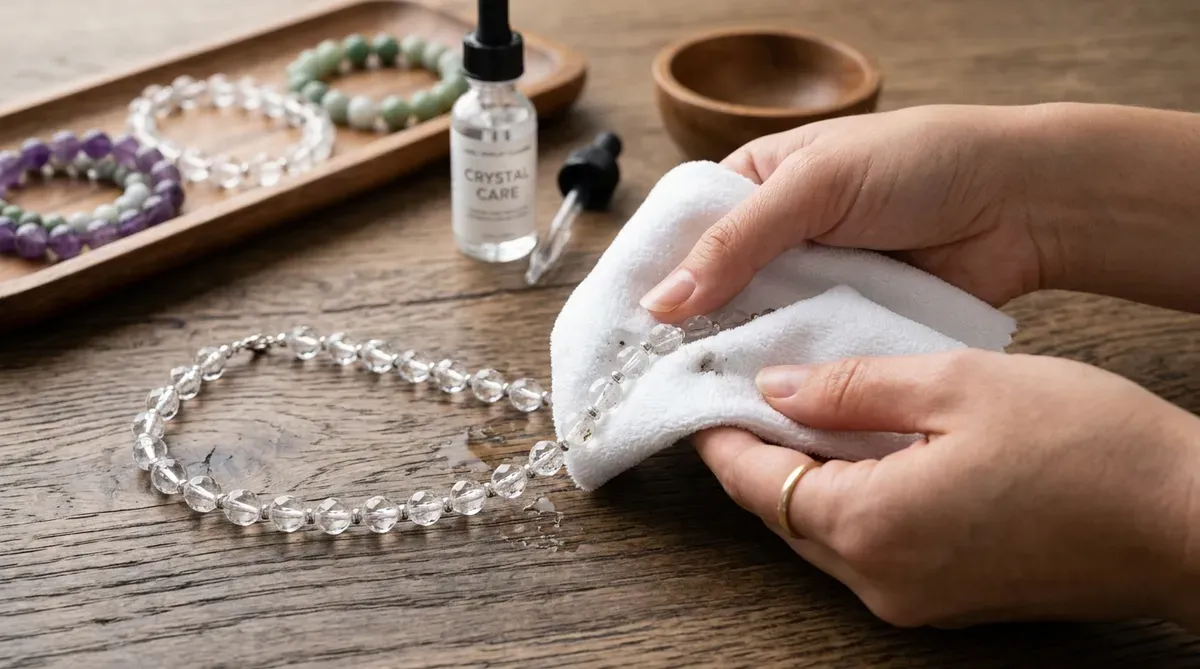
- Selenite Charging Plate: Resting your crystal bracelets on a flat Selenite plate or inside a Selenite bowl overnight is an effortless way to cleanse accumulated environmental vibrations. Selenite requires no water and is safe for all gemstone types.
- Dedicated Wooden or Velvet Tray: Avoid tossing multiple bracelets into a single tangled jewelry box. Gemstones of different hardnesses (e.g., Quartz at Mohs 7 vs. Fluorite at Mohs 4) will scratch one another. Store each piece flat in its own compartment.
- Moonlight Recharging: On the night of the Full Moon (Purnima), place your crystal bracelets on a clean windowsill where they can absorb the cool, gentle lunar light for natural rejuvenation.
Discover Genuine Spiritual Bracelets & Guides
If you are looking to expand your collection or ensure your existing jewelry fits perfectly, explore our verified resources:
- Explore handcrafted designs in our Natural Crystal & Gemstone Bracelet Collection.
- Discover traditional abundance symbolism with the Gold-Plated Dhan Yog Bracelet.
- Ensure an exact, comfortable wrist fit using our comprehensive guide on How to Measure Rudraksha & Bracelet Size.
- For questions regarding specific gemstone compatibility with your personal birth chart, speak to our verified scholars via a Personal Astrology Consultation.
Frequently Asked Questions
Can I wear my crystal bracelet 24/7 without removing it?
While high-hardness stones like Clear Quartz or Black Tourmaline are physically durable, continuous 24/7 wear is not recommended. Bathing soaps, nighttime friction, and sweat eventually degrade internal elastic cords and dull mineral luster. Taking your bracelet off during showers, gym sessions, and sleep will double or triple its lifespan.
What should I do if my crystal bracelet breaks?
In traditional crystal lore, when a gemstone bracelet snaps unexpectedly, it is believed to indicate that the stones have absorbed a significant energetic impact or fulfilled a specific phase of your personal journey. Physically, elastic cords simply experience material fatigue over 6 to 18 months of regular wear. You can gather the beads, cleanse them with incense smoke, and restring them on fresh jewelry-grade elastic cord.
Can someone else touch or wear my crystal bracelet?
Crystals are believed to adapt to their wearer's personal energetic field. If a friend or stranger handles your bracelet, simply cleanse it afterward with natural incense smoke, a singing bowl, or by resting it on a Selenite slab for a few hours before putting it back on.
Which wrist should I put my bracelet on after removing it?
As a general Vedic and holistic guideline, wear your bracelet on your left wrist (the receptive side) when seeking internal calm, emotional healing, stress reduction, and meditation. Wear it on your right wrist (the active, giving side) when seeking external manifestation, professional focus, commercial protection, and decisive action.
---
*Disclaimer: Crystal and astrological bracelets are intended for traditional spiritual practice, mindfulness, and personal ornamentation. They are not medical devices and are not intended to diagnose, treat, cure, or prevent any physical or mental health condition.*
Found this guide helpful?
Share it with friends and family embarking on their spiritual journey.
AstroJi Editorial Team
Verified SpecialistGemstone & Jewelry Specialist
Dedicated to dispelling myths and delivering lab-certified clarity on spiritual products for seekers nationwide.