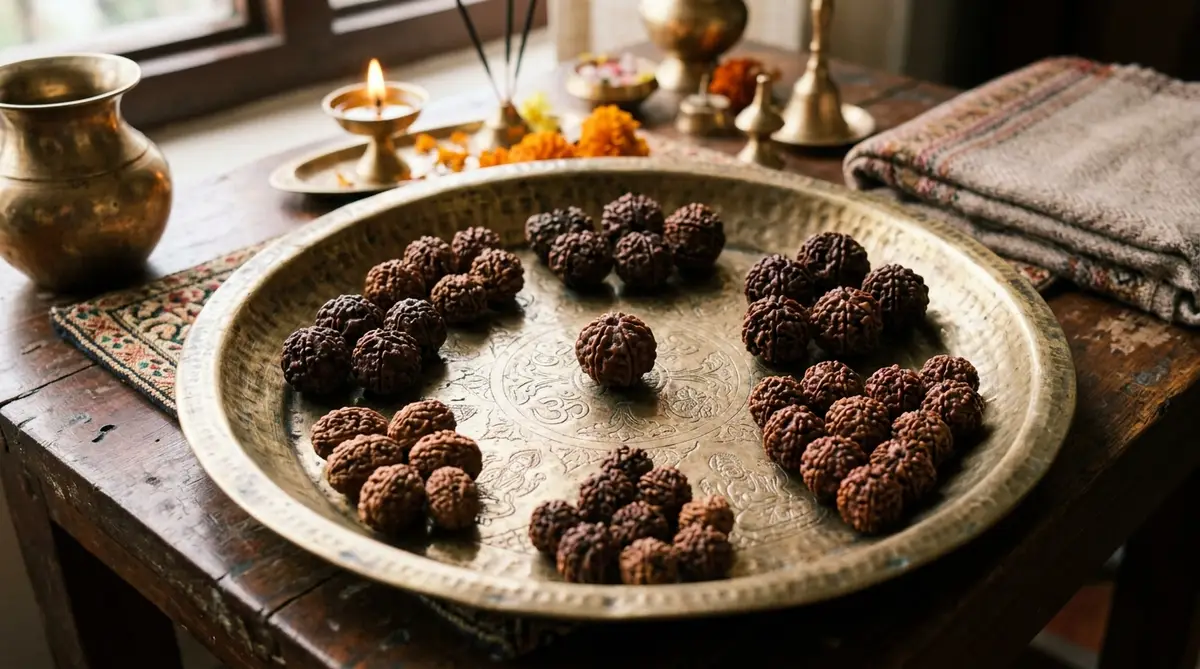
Navigating Rudraksha bead listings requires understanding origin differences, Mukhi seed cavity anatomical structures, bead size classifications, and official documentation standards.
Nepali vs Indonesian Java beads
Both Nepal and Indonesia produce genuine Elaeocarpus ganitrus tree seeds, but the botanical varieties differ in physical appearance, size, and groove structure.
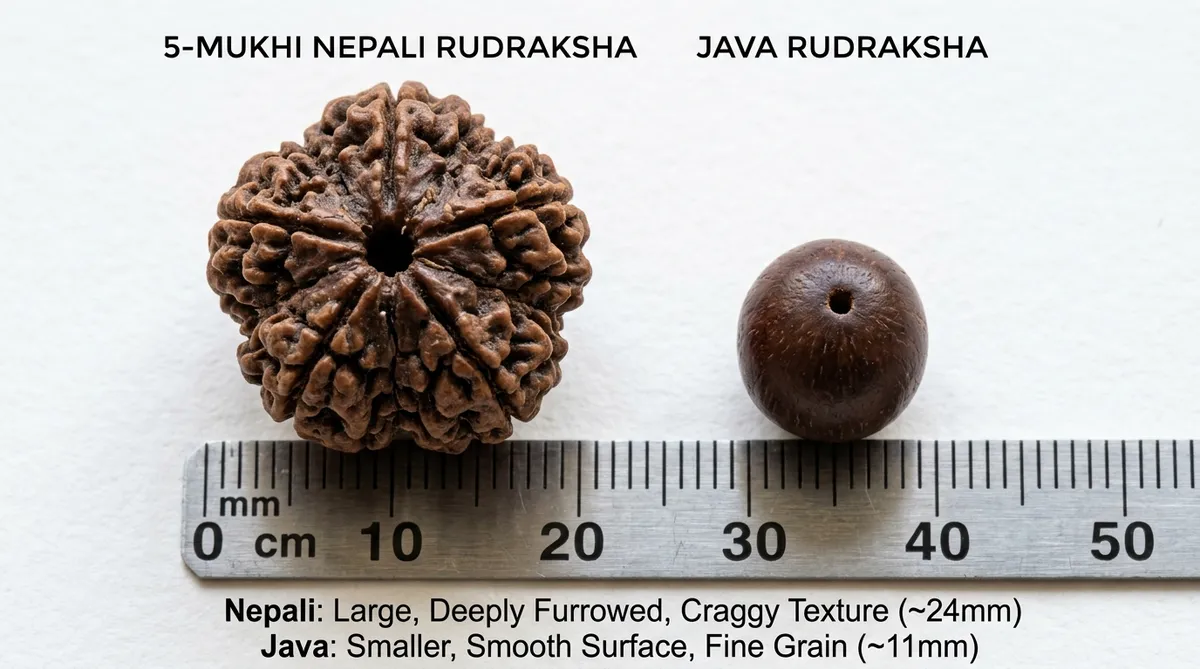
- Nepali beads grow larger, typically measuring 18mm to 30mm in diameter. They feature deep, pronounced Mukhi grooves, raised thorny surface tubercles, and clear internal seed chambers.
- Java (Indonesian) beads grow smaller, usually measuring 5mm to 15mm in diameter. Their Mukhi lines appear as fine, smooth surface etchings rather than deep grooves. Java beads are commonly used for light 108-bead japa malas because of their light weight.
Understanding Mukhi classifications
The word Mukhi refers to the face or external groove of the Rudraksha fruit seed. Botanically, each Mukhi line corresponds to an internal seed chamber (locule) inside the hard endocarp.
- 5-Mukhi beads make up over 70% of natural harvests. They are widely used for daily wearing and meditation malas.
- 1-Mukhi to 14-Mukhi beads represent rarer natural harvests. 1-Mukhi round Nepali beads are extremely rare in nature; most 1-Mukhi beads sold in markets are half-moon shaped Ek-Mukhi beads from Rameswaram or Indonesia.
Bead sizing and physical measurements
Sellers classify beads by diameter in millimeters:
- Small (Chhota): 10mm to 15mm
- Regular: 16mm to 20mm
- Large / Collector: 21mm to 28mm+
Larger Nepali beads show clearer Mukhi definition and higher density, making them easier to clean and inspect.
When buying high-Mukhi beads online, verify that the listing includes independent laboratory reports stating exact weight in grams, millimeter dimensions, and X-Ray clarity confirmation.
Find details on browse natural Rudraksha beads, view explore Rudraksha malas, or get in touch via contact AstroJi support.
Found this guide helpful?
Share it with friends and family embarking on their spiritual journey.
AstroJi Editorial Team
Verified SpecialistBotanical & Product Researcher
Dedicated to dispelling myths and delivering lab-certified clarity on spiritual products for seekers nationwide.