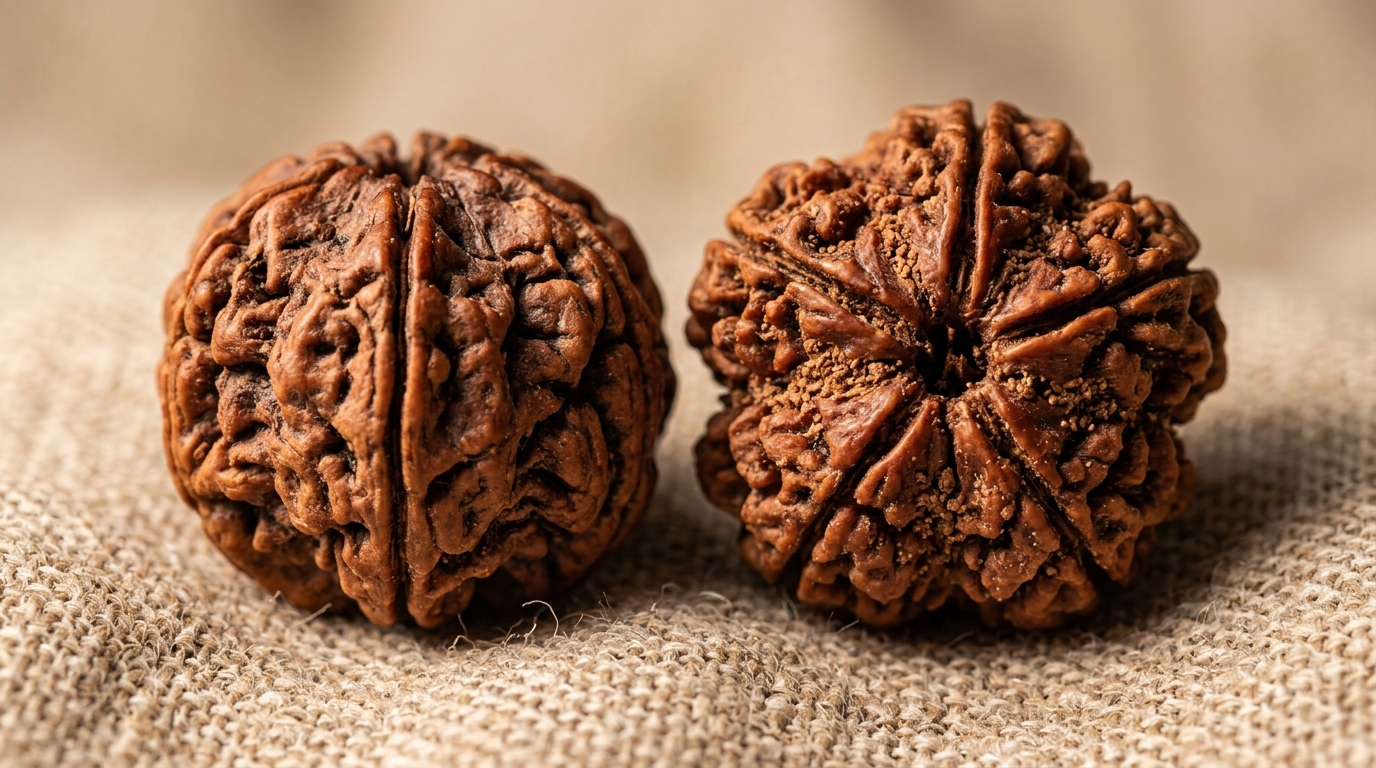
A genuine Rudraksha is the dried botanical stone of the *Elaeocarpus ganitrus* fruit. Because high-mukhi beads (such as 1-Mukhi, 7-Mukhi, or 14-Mukhi) command premium value in the market, counterfeit practices have evolved far beyond crude plastic imitations.
Today, fakers carve extra lines into common 5-mukhi beads, glue segments of different beads together, or mould composite wood dust with industrial resin. Identifying real beads requires understanding botany and laboratory radiography rather than relying on street myths.
The Gold Standard: Digital X-Ray Radiography
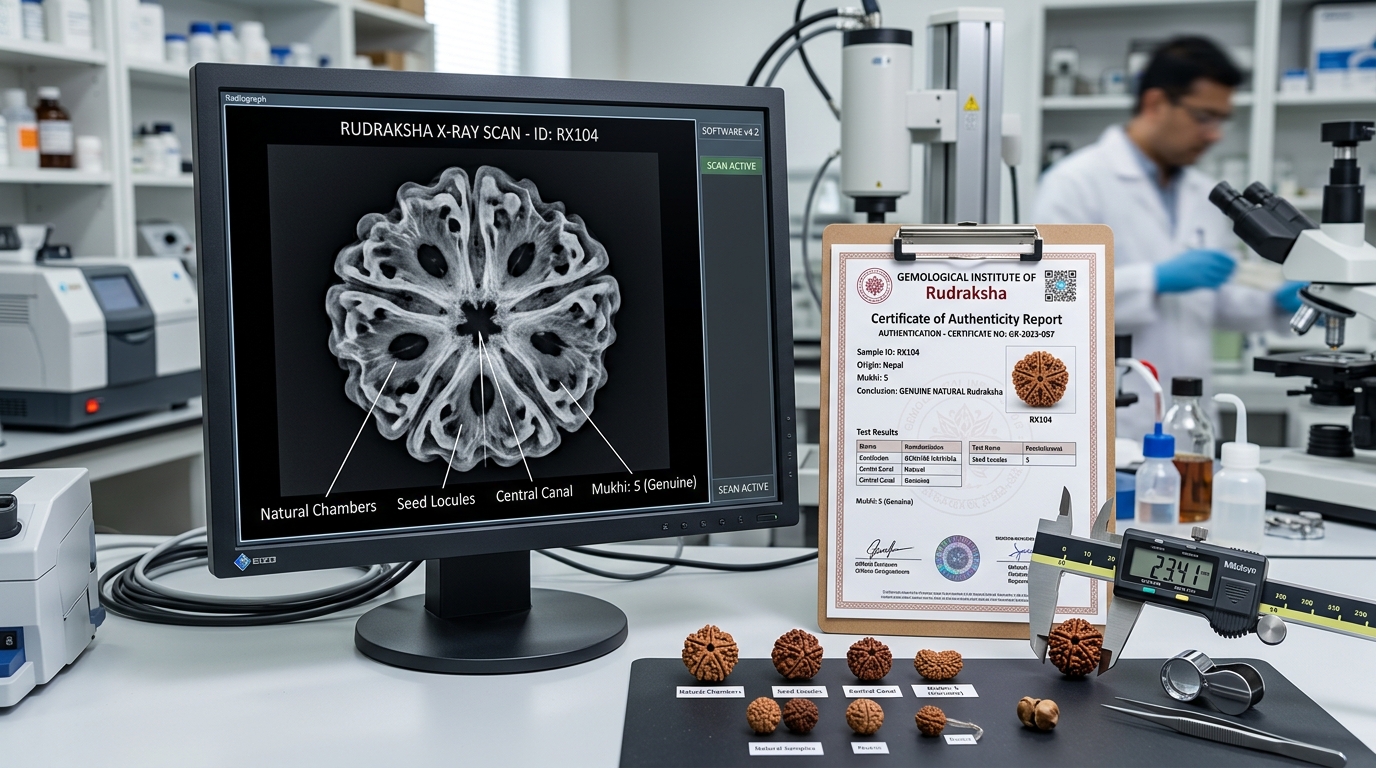
The only non-destructive, 100% conclusive way to authenticate a rare Rudraksha is digital X-ray radiography.
Each natural Mukhi (cleft line visible on the outside) corresponds to an internal seed chamber called a locule.
- A genuine 5-Mukhi bead has 5 separate internal chambers, each containing a tiny embryo seed.
- A genuine 7-Mukhi bead has 7 internal symmetrical chambers.
- When an unscrupulous seller carves artificial grooves on a 5-mukhi bead to sell it as an expensive 7-mukhi, the X-ray scan instantly reveals only 5 internal chambers. The two extra surface lines stop at the outer rind and have no corresponding internal seed compartments.
Laboratory X-rays also expose composite beads where two distinct seeds were hollowed, filled with lead or adhesive, and joined along a seam.
Why Street Tests (Floating and Copper Coins) Fail
Two folk tests remain widespread across social media, and both are scientifically invalid.
The Water Float Test
- The myth: Real Rudraksha sinks in water; fake ones float.
- The reality: An unripe or dried-out genuine Rudraksha with large air pockets inside its chambers can float. Conversely, a fake bead made of dense synthetic resin, lead-weighted wood, or compressed wood pulp will sink instantly. Sinking only measures density, not botanical authenticity.
The Copper Coin Spin Test
- The myth: Placing a bead between two copper coins makes it rotate due to magnetic energy.
- The reality: Any rounded, ribbed object placed between two smooth copper surfaces will rotate slightly when minimal downward pressure or natural hand tremor is applied. It is a simple mechanical pivot effect, not a bio-magnetic verification.
Physical Inspection: Cleft Lines and Surface Texture
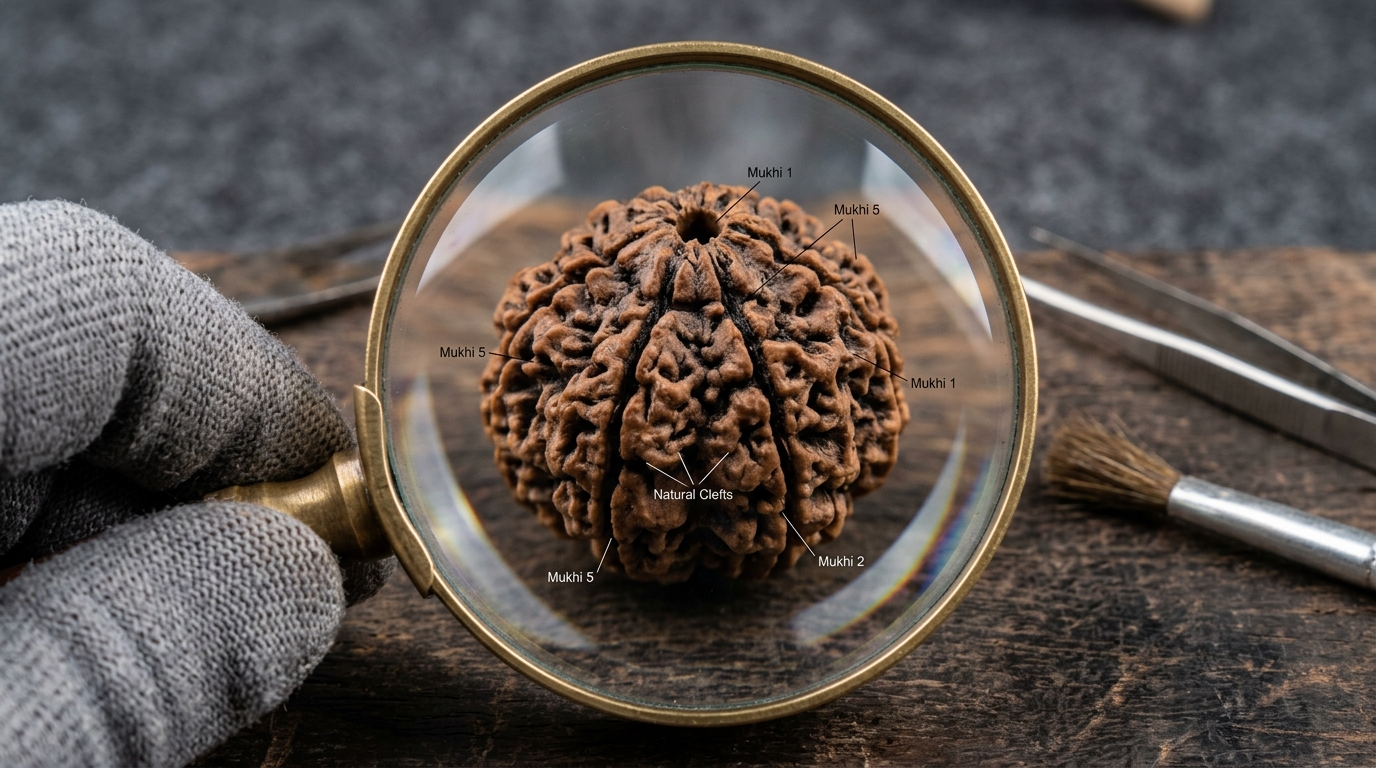
If you do not have immediate access to an X-ray machine, a 10x jeweler loupe helps identify surface red flags:
- Continuity of Lines: A natural Mukhi line runs uninterrupted from the top stalk hole (mouth) to the bottom tail hole without abruptly fading into smooth wood.
- Contour Depth: Natural clefts have organic, rough micro-ridges resembling tiny mountain valleys. Carved lines made with knife blades or dental drills appear unnaturally sharp, smooth, and uniform under 10x magnification.
- Adhesive Seams: Look closely along the Mukhi furrows. If you spot tiny discolored glue lines, differing wood grain patterns on either side of a furrow, or powdery residue, the bead is likely a pieced composite.
Reading a Gemological Lab Certificate
When buying high-mukhi beads or complete sacred malas, always request an independent laboratory verification report. A valid certificate specifies: 1. Botanical identity: Confirmed as *Elaeocarpus ganitrus*. 2. Bead dimensions & weight: Accurate to two decimal places (e.g., 21.45 mm, 3.82 grams). 3. Internal locule count: Verified by X-ray scan matching the exterior Mukhi count. 4. QR Code Verification: A verifiable link to the testing laboratory database records.
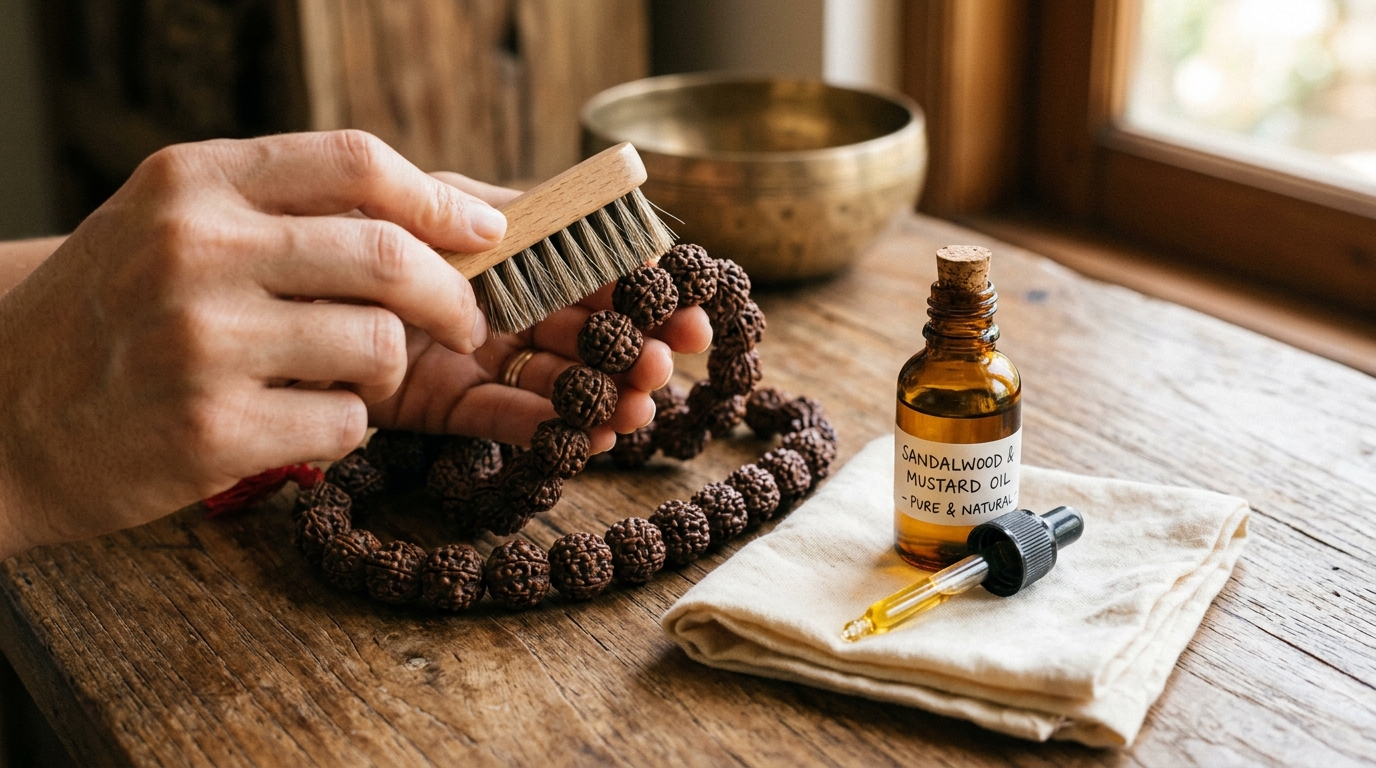
Cleaning and Conditioning Authentic Beads
Natural Rudraksha wood dries out over time, especially in air-conditioned rooms or dry winters.
- Soak beads in lukewarm water for 20 minutes once every few months to loosen trapped dust.
- Clean out the deep grooves using a soft-bristled toothbrush.
- Dry thoroughly on a clean cotton towel for 24 hours.
- Apply 2 to 3 drops of pure sandalwood or mustard oil with a brush to condition the wood grain and prevent cracking.
Browse our catalog of lab-tested authentic Rudraksha beads or contact our support team if you need help verifying your existing prayer items.
Found this guide helpful?
Share it with friends and family embarking on their spiritual journey.
AstroJi Editorial Team
Verified SpecialistGemological & Botanicals Research Specialist
Dedicated to dispelling myths and delivering lab-certified clarity on spiritual products for seekers nationwide.