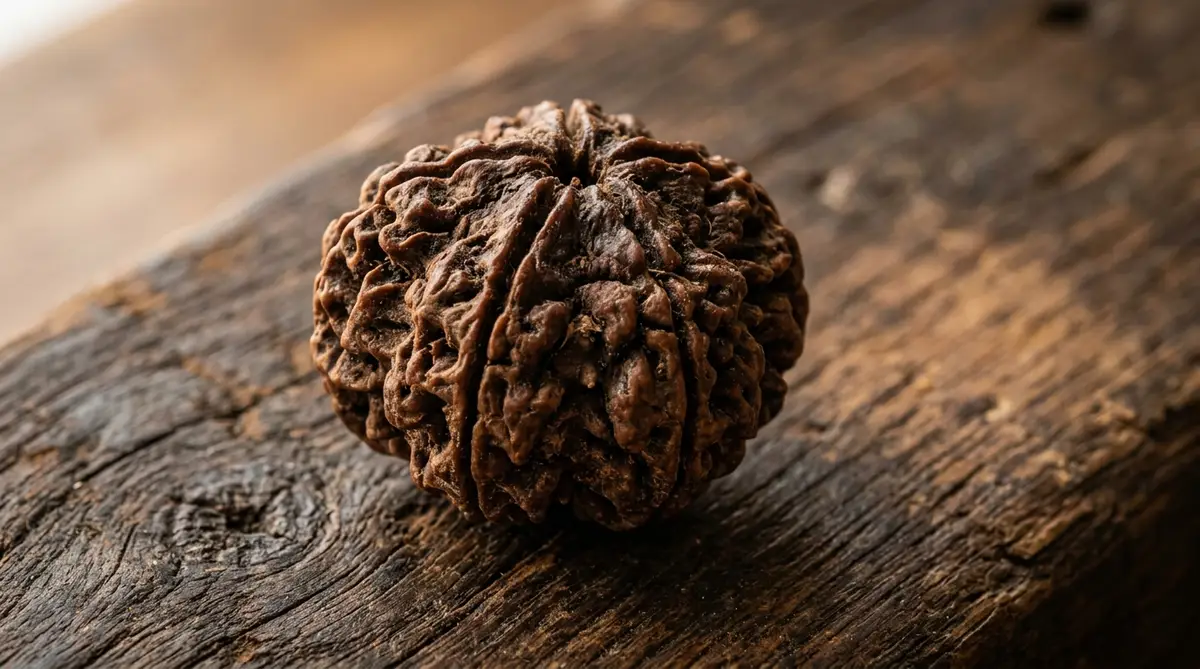
Authentic Rudraksha beads come from the fruit of the Elaeocarpus ganitrus tree, grown primarily in Nepal and Indonesia. Counterfeits enter the market when carved wooden spheres, molded plastic beads, or carved Areca nuts get passed off as rare higher-Mukhi beads. Checking authenticity requires physical, structural, and laboratory verification.
Physical botanical checks
Natural Mukhi lines are deep structural grooves that form naturally during seed growth. They run continuously from the top stem connection (pedicel) to the bottom apex (crown).
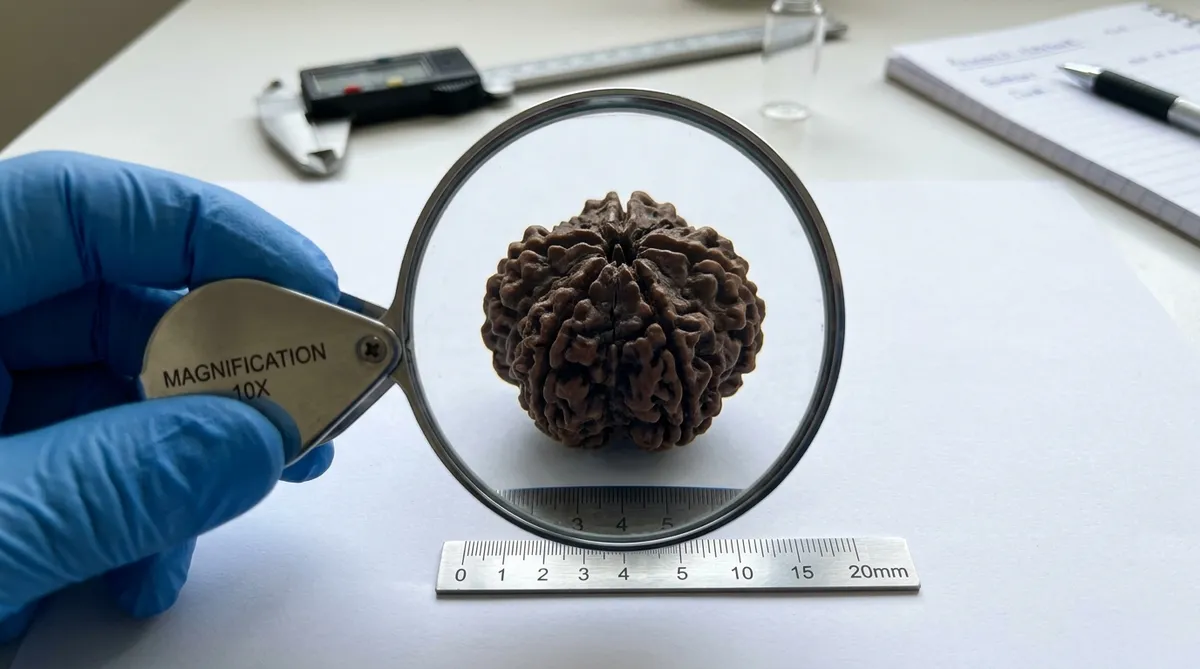
- Examine the groove walls under a 10x magnifier. Authentic grooves have natural organic texture, irregular contours, and thorny surface tubercles along the edges.
- Watch out for smooth carved cuts. Carved fake grooves leave sharp tool marks or flat sanded surfaces without natural thorny texture.
- Check stem-to-crown continuity. A genuine line never stops abruptly mid-bead or branches outward into carved patterns.
Debunking the copper coin myth
A widespread myth claims that holding a Rudraksha bead between two copper coins proves its authenticity if the bead rotates. This is false.
The rotation occurs due to electromagnetic induction between copper coins and moisture from human fingertips, or minor physical pressure. Artificial plastic beads and plain wooden beads can rotate under the exact same coin pressure. Do not rely on copper coin tests or water floating tests as proof of authenticity. Immature natural beads floating in water does not mean they are artificial, while heavy carved wooden fakes can easily sink.
Laboratory X-Ray certification
The only reliable test for high-value Mukhi beads (such as 1-Mukhi, 7-Mukhi, or 14-Mukhi) is X-Ray radiography.
Inside an authentic Rudraksha fruit seed, separate internal chambers hold natural seeds. An X-Ray scan reveals these internal internal seed compartments (locules). The number of internal seed cavities must match the number of external Mukhi grooves. If a bead shows 7 Mukhi grooves on the outside but only 5 seed cavities inside, the extra grooves were carved by hand.
When buying online, look for independent ISO-certified gemological laboratory certificates that include X-Ray images, bead dimensions in millimeters, and precise dry weight in grams.
If you have questions about specific bead specifications, you can browse authentic Rudraksha beads, check explore Rudraksha malas, or contact AstroJi support.
Found this guide helpful?
Share it with friends and family embarking on their spiritual journey.
AstroJi Editorial Team
Verified SpecialistProduct Research Specialist
Dedicated to dispelling myths and delivering lab-certified clarity on spiritual products for seekers nationwide.