
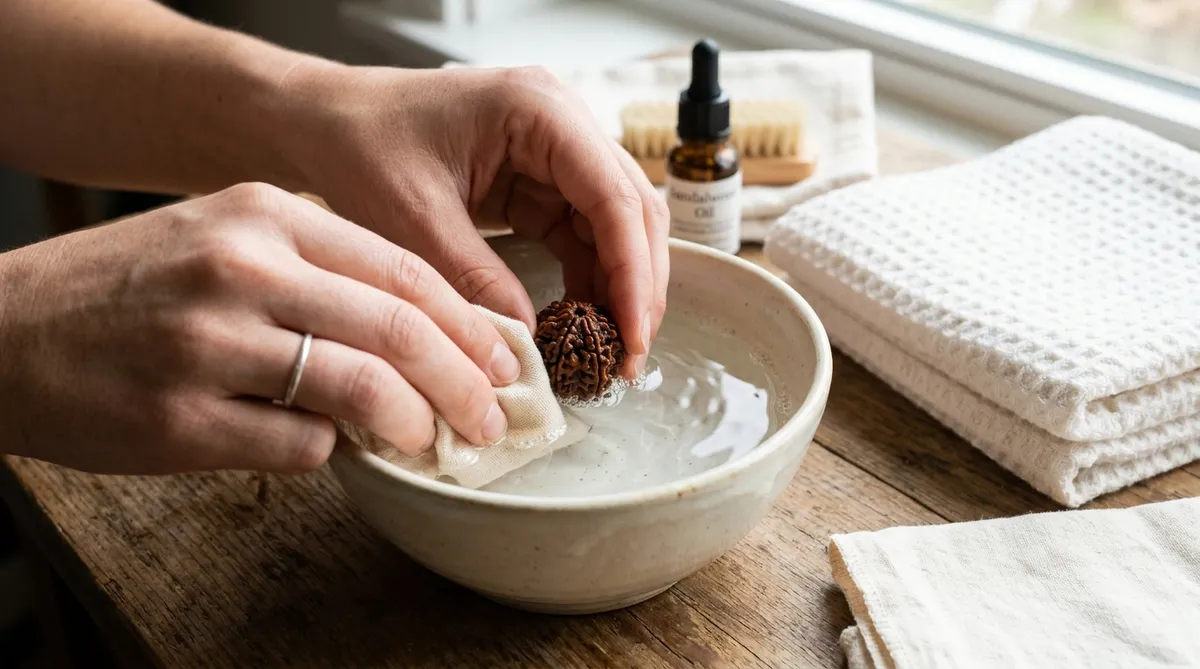
During monsoon months (June to September) and humid coastal weather, airborne moisture poses a challenge for natural wood products. Because Rudraksha beads are porous seeds of Elaeocarpus ganitrus, high humidity can trap dampness inside deep Mukhi grooves, encouraging white mold growth.
Preventing mold growth in deep Mukhi grooves
Trapped sweat mixed with damp air creates an environment for mold spores.
- Inspect your beads weekly during rainy weather under good light. Look for fine white powdery spots inside groove crevices.
- If white mold appears, do not panic. Submerge the bead in lukewarm plain water for 5 minutes and scrub gently with a soft toothbrush to remove spores.
- Never use household disinfectant sprays or chemical cleaners. Surfactants damage natural wood fibers permanently.
Indoor air-drying routine
After cleaning or exposure to rain:
1. Pat the bead dry with a clean cotton cloth. 2. Leave the bead on a dry towel in a well-ventilated room with ceiling fan airflow for 24 hours. 3. Keep away from closed damp wardrobes or sealed plastic containers.
Monthly sesame oil shield
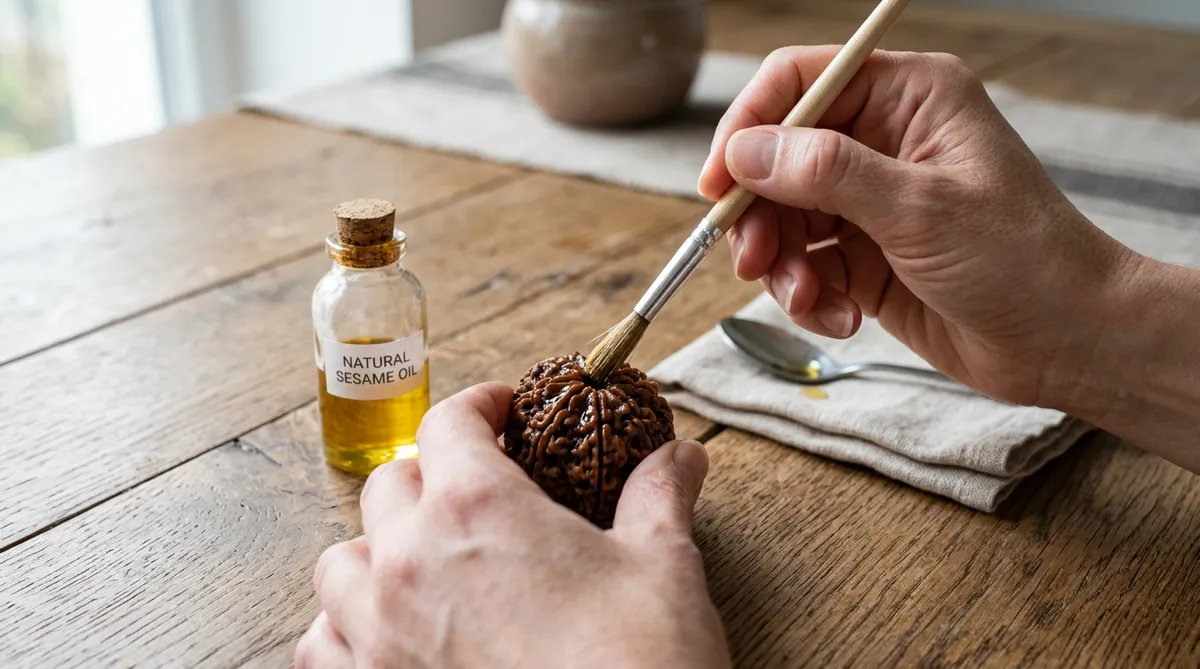
Applying a thin coat of unrefined sesame oil or mustard oil creates a natural hydrophobic barrier over the wood shell, repelling airborne moisture while keeping the internal seed fibers pliable and strong.
You can browse natural Rudraksha beads, view explore authentic Rudraksha malas, or contact support at contact AstroJi support.
Found this guide helpful?
Share it with friends and family embarking on their spiritual journey.
AstroJi Editorial Team
Verified SpecialistBotanical & Product Specialist
Dedicated to dispelling myths and delivering lab-certified clarity on spiritual products for seekers nationwide.